
Key points
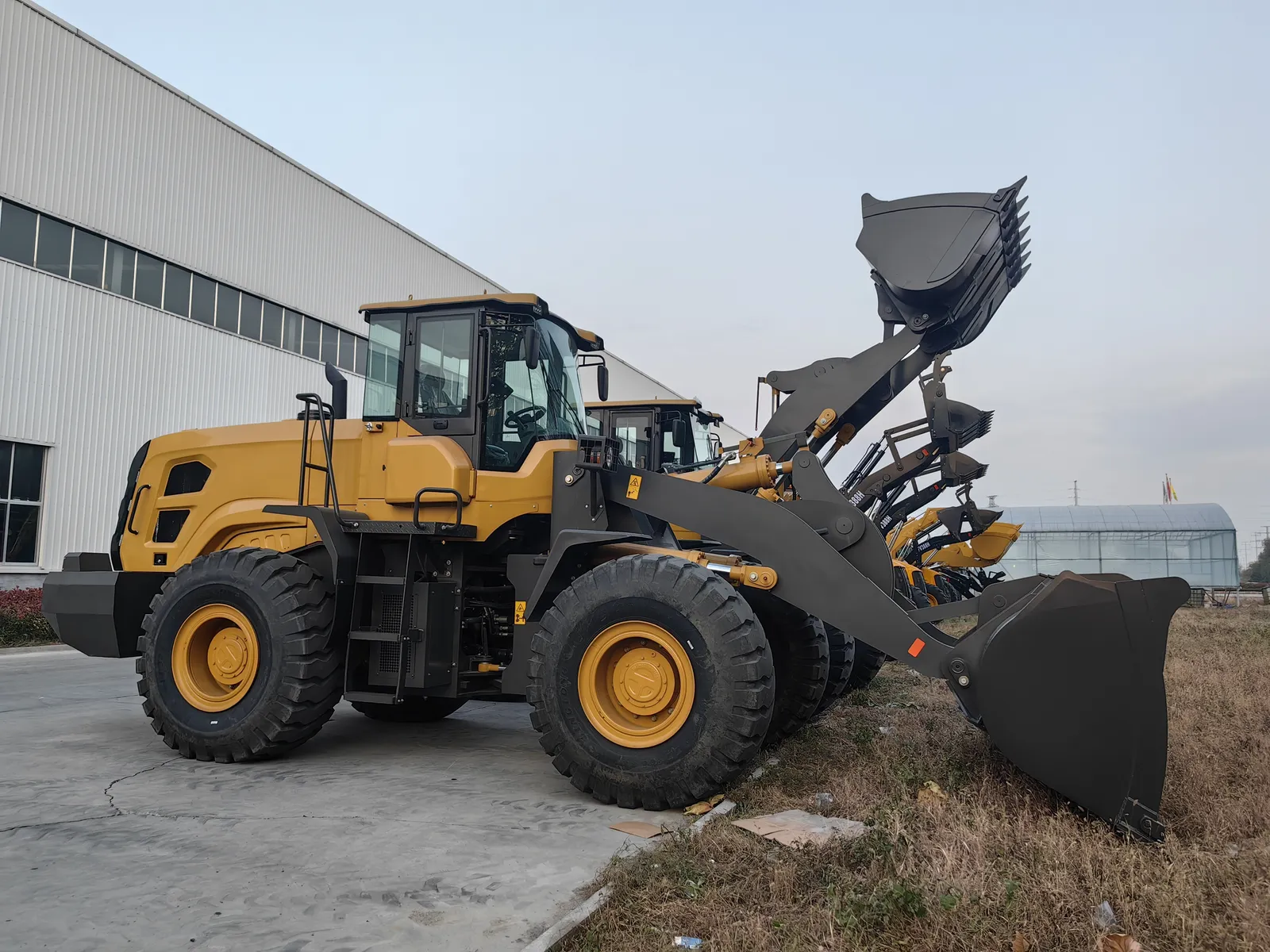
- “5 tons” refers to rated load. For wheel loaders with a bucket, ISO 14397-1 defines rated load as 50% of the full-turn static tipping load; the YUYAN 956G catalog lists rated load 5,000 kg and tipping load 98 kN, but the specific test conditions must be requested for confirmation.
- Choose the bucket by the material’s loose density: 3 m³ of loose gravel can exceed 5 t, while lighter materials such as coal allow a larger bucket.
- When loading trucks, Caterpillar recommends 3 to 5 passes to fill an articulated dump truck; size the bucket based on the truck body.
- A 5 t loader will not fit into a 40' High Cube container: the 956G is 2.88 m wide and 3.57 m high, while the container door opening is about 2.34 × 2.60 m. It is usually shipped by ro-ro, on flat rack, or as breakbulk.
What “5 tons” actually means
A loader spec sheet has three commonly confused figures: rated load, tipping load, and operating weight. The rated load defines the class. For wheeled loaders with a bucket, ISO 14397-1 calculates rated load as 50% of the full-turn static tipping load (or the hydraulic lift capacity if smaller); Caterpillar uses the same 50% rule.
| Parameter | Spec sheet value | What it means |
|---|---|---|
| Rated load | 5,000 kg | Recommended bucket load for normal operation |
| Tipping load | 98 kN (about 10 t) | Verify separately from the rated load and request the test conditions and full-turn parameters. |
| Operating weight | 16,650 / 16,910 / 16,950 kg, depending on configuration. | The catalog lists different weights by configuration; confirm the quoted engine and transmission combination and the delivery weight. |
| Rated bucket capacity | 3.0 m³ | Nominal volume of the standard bucket; actual weight depends on the material |
| Unload height | 3,150 mm | Height of the bucket lip when unloading; must be higher than the truck body sideboard |
When comparing offers, always request the full-turn tipping load and the machine operating mass with the quoted bucket. Two machines both labeled “5 t” but with very different operating masses will not perform the same. For reference, this site lists the SEM 655D as 16,800 kg; the XCMG XC958 as 18,700–19,600 kg, with a rated load of 5,500 kg.
For comparison with a familiar model: Caterpillar lists the 950 GC with an operating mass of 18,849 kg, buckets of 2.9–4.4 m³, and a full-turn tipping load per ISO 14397-1 of 11,006 kg; using the same 50 % rule, this corresponds to about a 5.5 t rated load.
Choose the bucket by material and truck
A 3 m³ standard bucket is not suitable for every material. The weight of a full bucket depends on the material’s loose density and the fill factor. Calculation is simple: bucket volume × loose density × fill factor. The result should be close to the rated load, not routinely exceed it.
| Material | Loose density (kg/m³) | Weight with 3 m³ |
|---|---|---|
| Earth | 1,250–1,600 | 3.8–4.8 t |
| Sand | 1,420–1,840 | 4.3–5.5 t |
| Gravel | 1,510–2,020 | 4.5–6.1 t |
| Crushed stone | 1,600 | 4.8 t |
| Clay | 1,480–1,660 | 4.4–5.0 t |
| Bituminous coal | 890–949 | 2.7–2.8 t |
Densities: soil, sand, gravel, crushed stone and clay from Caterpillar; bituminous coal from Komatsu. Actual values vary with moisture content and particle size. According to Caterpillar, the fill factor is 85–100% for loose aggregates depending on size, and 75–90% for average blasted rock.
Therefore, with gravel or sand at 1,800–2,000 kg/m³, a bucket of about 2.6–2.9 m³ keeps each pass near 5 t; for lighter materials such as coal you may choose a larger bucket: a 4.5 m³ bucket with bituminous coal weighs about 4.0–4.3 t. The SEM 655D offers buckets from 2.7 to 4.5 m³.
For truck loading, Caterpillar recommends 3 to 5 passes to fill an articulated truck, and Komatsu recommends 3 to 6 in mining. For example, if the truck carries 20 t per trip and each pass loads about 5 t, that’s 4 passes—within the recommended range. Also confirm the discharge height clears the truck sideboards.
Engine, transmission and axles
In the 2026 catalog, YUYAN 956G engine options are Weichai WD615G.220 China II, 162 kW, or WP10HG230E670 Euro V, 170 kW. On other models shown on this site, the SEM 655D uses Weichai WD10G and the XCMG XC958 uses Cummins QSB6.7. Request the exact engine model and emissions information quoted, and verify spare parts, local service and compatibility with the destination country’s emissions requirements; import requirements should be confirmed with the local importer or competent authority.
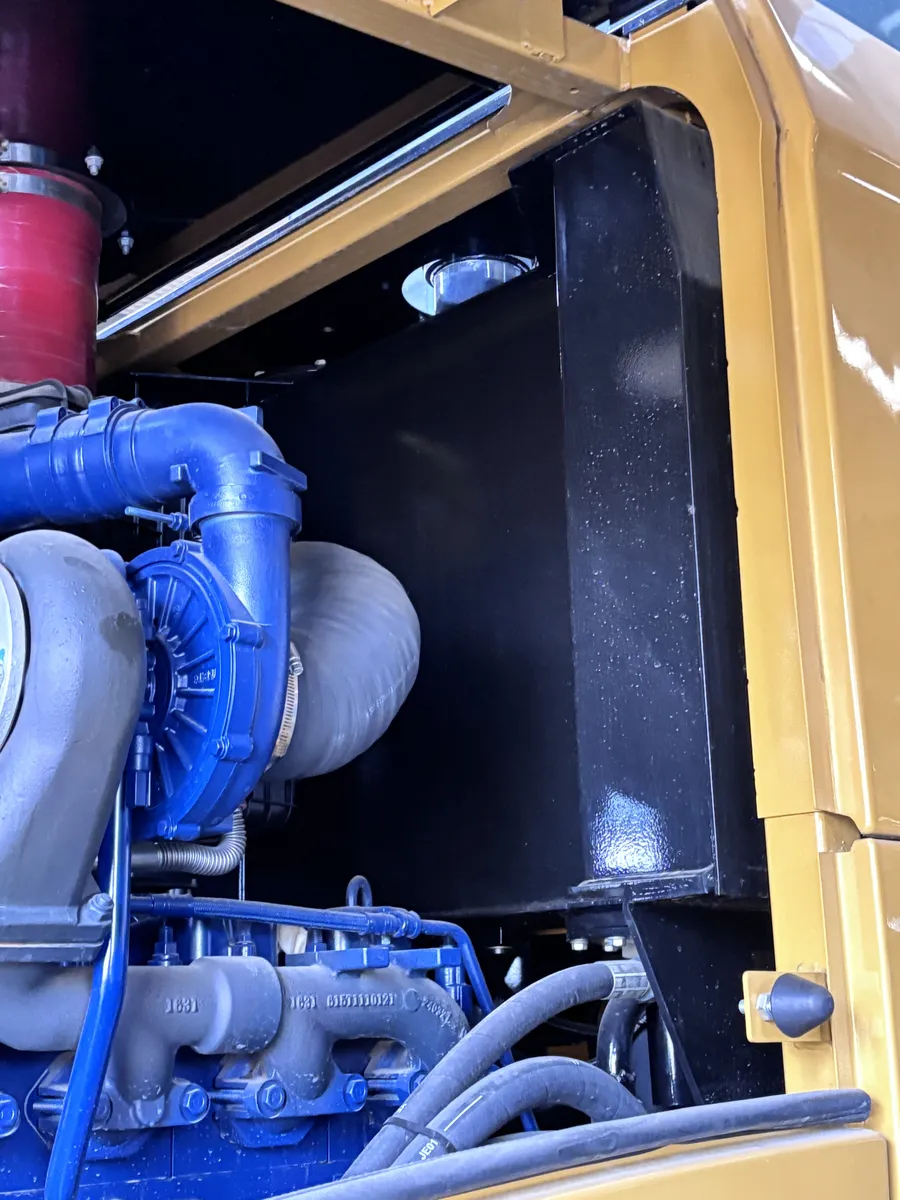
If the machine will operate at high altitude, consider that diesel engine power falls as air density decreases. As a reference, a Cummins diesel generator manual gives a reduction of about 3.5% per 305 m (1,000 ft); exact values depend on the engine, so request the altitude power curve from the manufacturer.
On transmission, the 2026 956G catalog shows a single-phase four-element hydraulic torque converter and a planetary power-shift gearbox, 4 forward 4 reverse; the service brake is four-wheel air-over-oil caliper disc. Also confirm the brands and models of the gearbox and axles and include them in the quotation.
Tires: L2, L3, L4 and L5
Tire codes indicate tread type: “L” denotes loader and dozer tires, and the number indicates tread depth rating. According to manufacturers such as Yokohama OHT, Michelin, Titan and Bridgestone:
| Code | Tread | Typical use |
|---|---|---|
| L2 | Traction, self‑cleaning tread | Soft ground, mud, earthworks |
| L3 | Rock, normal depth | General use: construction sites, aggregates and yards |
| L4 | Deep tread | Abrasion- and cut-resistant, quarries |
| L5 | Extra-deep tread | Severe rock conditions, quarries and mines |
23.5-25 is the usual size in this class, and all 5 t models on this site use it (the XC958 in the radial version is 23.5R25). For rock quarries, ask for L5 or reinforced-protection tires; for earth and sand work, an L3 is usually sufficient.
Attachments and special versions
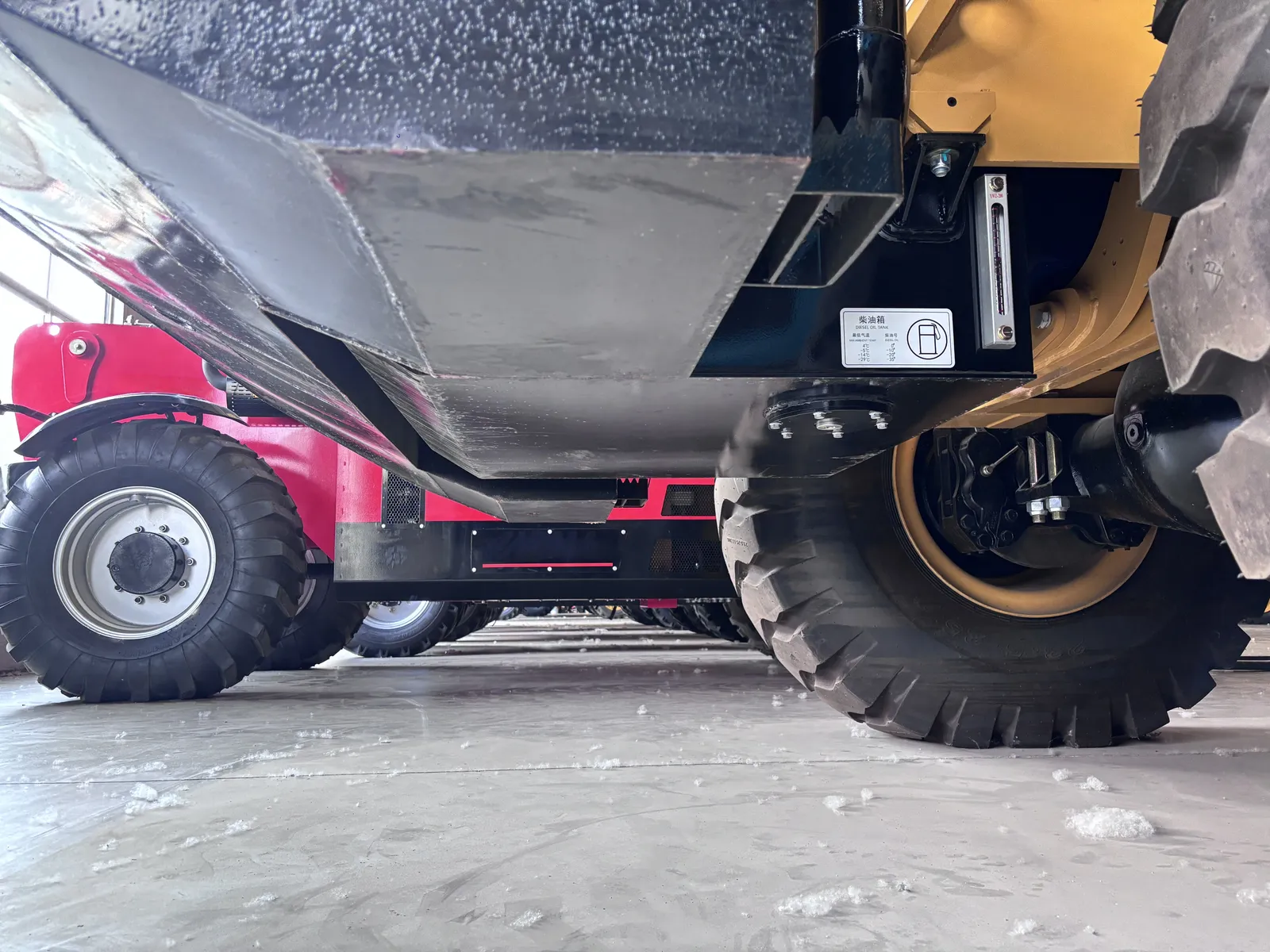
A 5 t loader can work with a standard bucket, rock bucket, light-materials bucket, pallet or log forks, and grapples; if you will change attachments often, request a quick coupler.
With forks, the rated load is calculated differently: according to Caterpillar, SAE J1197 gives 50% of the tipping load, while EN 474-3 can reach 80% on firm, level ground. Ask which standard the spec sheet uses.
For sugarcane there is a dedicated machine: the YUYAN YM6700 cane loader, with 5,300 mm maximum discharge height and 1,200 kg maximum grab capacity, designed to load, stack and transfer cane.
How a 5 t wheel loader is shipped
A loader of this class will not fit in a standard container. The YUYAN 956G measures 8,250 × 2,880 × 3,570 mm (length × width × height) and its bucket is 2,950 mm wide, while a 40' High Cube container door is 2,340 × 2,597 mm (width × height) according to Hapag‑Lloyd. For that reason these machines normally ship by ro-ro, on flat rack, or as breakbulk depending on the loading port and route. Ask the supplier for shipping dimensions and the loading plan.
New or used: request a quote and reference prices
| Model | Condition | Rated load / bucket | Reference price |
|---|---|---|---|
| YUYAN 956G | New, YUYAN own brand | 5,000 kg / 3.0 m³ | Request quote |
| SEM 655D | New, other brand | 5,000 kg / 2.7–4.5 m³ | US$50,000 |
| XCMG XC958 | New, other brand | 5,500 kg / 3.0–3.2 m³ | US$50,000 |
| XCMG 50 | Used | 5 t / 3.0 m³ | US$20,000 |
| XCMG LW500KV | Used | 5,000 kg / 2.5–3.0 m³ | US$23,800 |
| LiuGong 856H | Used | 5,000 kg / 2.7–3.0 m³ | US$26,800 |
ImportantReference FOB prices are shown for new machines of other brands and for used machines; these are not final quotations. Machines are matched to your request; prices correspond to specific configurations or individual machines and vary with loading port and date. YUYAN 956G is manufactured by YUYAN; request price by configuration. Written quotation is the valid offer.
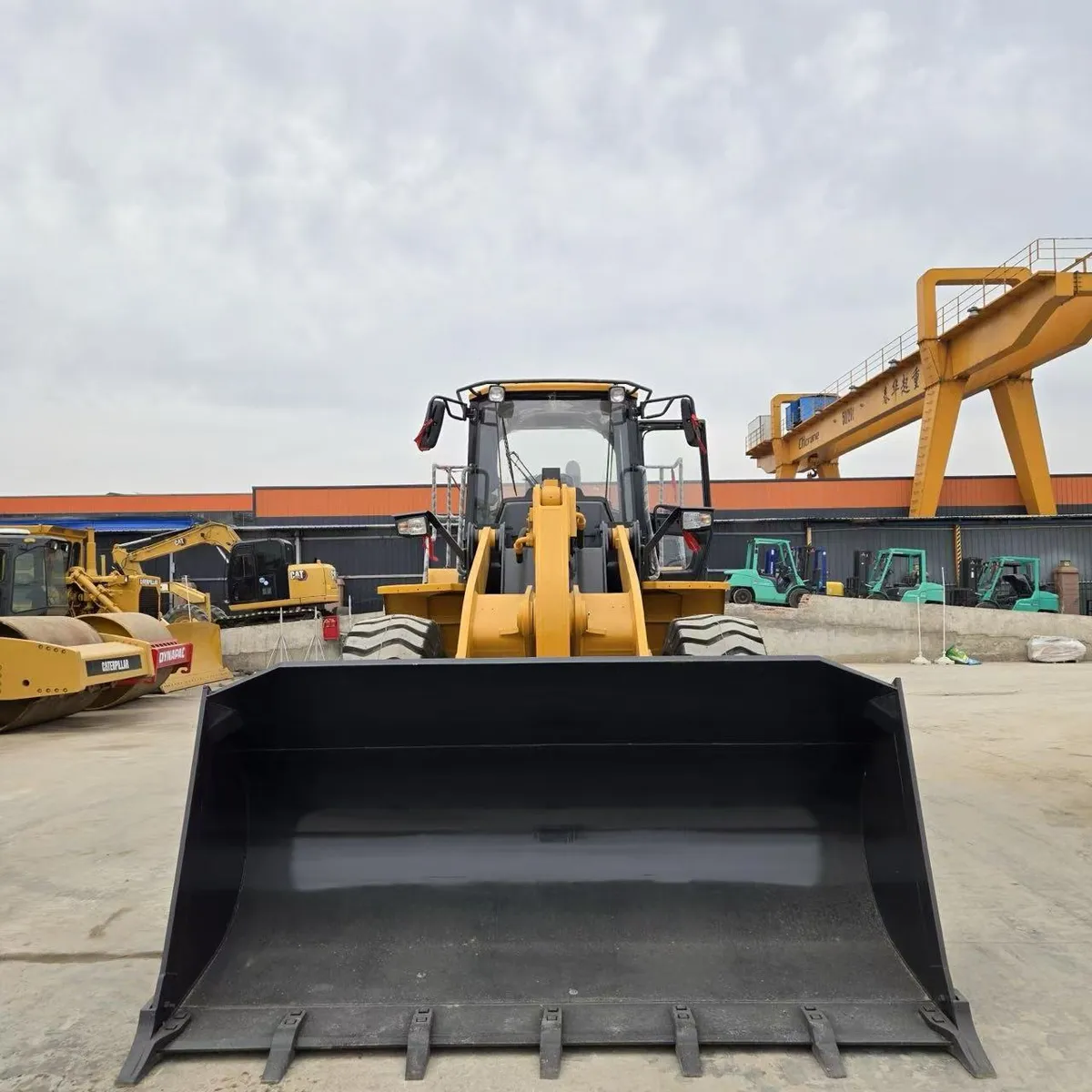
A used machine costs less up front, but its value depends on the unit: operating hours and the condition of the transmission, axles, articulation and tires. When inspecting a used loader, focus on:
- Play in the center articulation and in the boom and bucket pin joints.
- Forward and reverse shifts are smooth, no slipping, and the torque converter oil temperature is stable.
- Brakes and steering are normal, with no leaks in cylinders or axles.
- Wear on the tires and the bucket cutting edge.
- Check the frame and boom for cracks or repair welds.
Frequently Asked Questions
What does “5-ton wheel loader” mean?
It means a rated load of about 5,000 kg. For wheel loaders with a bucket, the rated load is calculated as 50% of the full-turn tipping load, so the tipping load of these machines is about 10 t.
What bucket size do I need for sand or gravel?
Calculate: bucket capacity × loose density × fill factor. With densities of 1,800–2,000 kg/m³, a bucket of about 2.6–2.9 m³ keeps each pass near 5 t; for lighter materials you can use a larger bucket.
Can a 5-ton loader fit in a container?
Does not fit whole into a standard container. The 956G, for example, is 2.88 m wide and 3.57 m high, exceeding the ~2.34 × 2.60 m doorway of a 40' High Cube; it normally ships ro-ro, on a flat rack, or as breakbulk.
How much does a Chinese 5-ton wheel loader cost?
Reference FOB price for the representative new machines SEM 655D and XCMG XC958 is US$50,000. Representative used machines are US$20,000–26,800. None are final quotations. New machines of our own brand are quoted by configuration; please provide configuration, quantity and destination port.
What tire suits a quarry?
For rock conditions choose deep-tread tires, L4 or L5; for earth and sand L3 is usually sufficient. Confirm with your supplier based on the working conditions.
Sources consulted
- ISO: standard ISO 14397-1, loader rated operating load (in English)ISO
- Caterpillar: configuring wheel loaders by operating load (in English)Caterpillar
- Caterpillar: material density tables (in English)Caterpillar
- Caterpillar: bucket fill factors (in English)Caterpillar
- Caterpillar: number of passes to load trucks (in English)Caterpillar
- Komatsu: loader tool selection guide (English)Komatsu
- Caterpillar: 950 GC medium wheel loader (English)Caterpillar
- Yokohama OHT: differences between R-4, L-4 and L-5 tires (English)Yokohama OHT
- Bridgestone: off-the-road tire tread catalog (English)Bridgestone
- Hapag-Lloyd: 40' High Cube container dimensions (English)Hapag-Lloyd
- Cummins: diesel generator set service manual — altitude derating (English)Cummins
External sources explain general rules; specific taxes, permits and contractual conditions depend on the destination country authority and the written contract.
With the target model and destination port, the next step is to verify the specific equipment and the quotation.
Submit your purchase request ↗Back to the purchasing guide ↗