
Key points
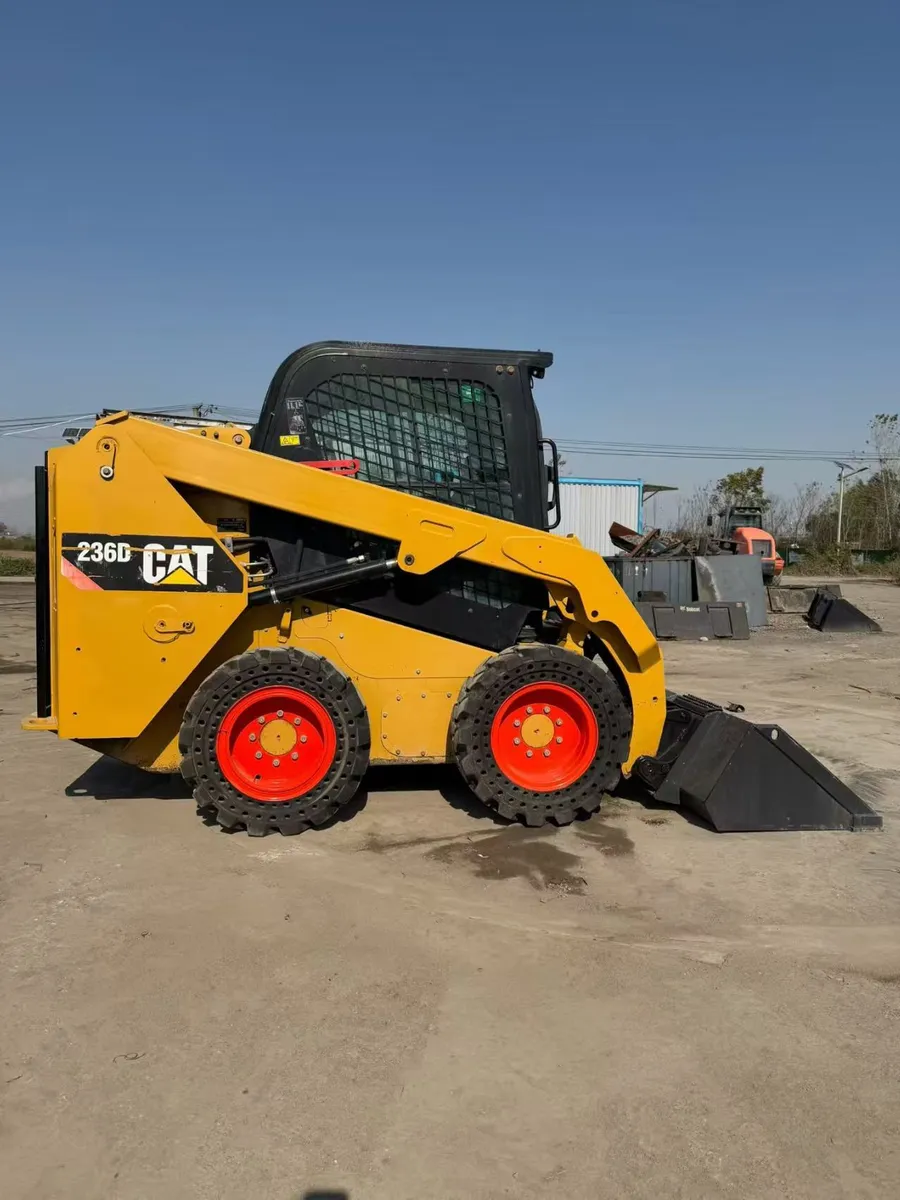
- Read ROC and tipping load for the same machine and same configuration. Caterpillar’s CAT 236D sheet lists 818 kg ROC and 1,633 kg tipping load; compact track loader pages list ROC as 35% of tipping load, so don’t mix those figures when comparing.
- Radial lift gives more forward reach at mid height; vertical lift gives greater forward reach at maximum height. Choose the lift path based on the actual task: backfill, low‑level work, or loading high‑side trucks.
- For a used machine, verify the serial number, hour meter and continuous operation video match; inspect boom pins and bushings, quick coupler, hydraulics, drive train, tires or tracks, cold start, safety interlocks and boom support.
- The reference FOB price for the used CAT 236D on this site is US$26,800. It is not a final quotation; the machine’s year, hours and specific condition affect its price. New, own-brand skid steer loaders are quoted by configuration and require a written offer.
Step 1: put ROC, tipping load and dimensions on the same spec sheet
When requesting a quote, don’t ask only “how much can it lift.” ROC is the everyday rated load listed on the spec sheet; tipping load is a separate stability‑related figure. Both must come from the same tires or tracks, bucket, counterweights and hydraulic configuration. Caterpillar’s official CAT 236D sheet lists 818 kg ROC and 1,633 kg tipping load, about a 50% relationship. Use this example to check that a spec’s numbers come from the same configuration, but it does not replace the seller’s confirmation for a specific unit.
| Specifications | Official spec-sheet values | How to use it when buying |
|---|---|---|
| ROC (Rated Operating Capacity) | 818 kg | Compare it with the actual bucket or attachment load required |
| Tipping load | 1,633 kg | Check it together with the ROC and confirm both figures are for the same configuration |
| Operating weight | 2,975 kg | Check transport, ground-bearing capacity and configuration differences |
ImportantA wheeled skid steer loader and a compact track loader are not interchangeable just by model size. Caterpillar’s compact track loader page lists ROC at 35% tipping load; first confirm whether the spec sheet you received is for a wheeled or track machine.
Step 2: choose size, lift path and undercarriage according to the work
First write down the daily tasks: what material the bucket will load, whether you’ll lift pallets over a truck bed side, whether you’ll turn in narrow aisles, whether the ground is firm or soft, and which attachments you’ll use. Don’t choose size by operating weight alone; also get length with bucket, tire overall width or track width, cab height, maximum pin height and dump reach so you can check site, vehicle and transport limits.
| Lift path | Features shown in data | Tasks to confirm |
|---|---|---|
| Radial lift | Boom follows an arc, providing greater forward reach at medium height | Backfilling, excavating, low dumping, or flatbed loading |
| Vertical lift | Load rises closer to the machine’s vertical line, with greater forward reach at maximum height | Pallets, high-sided trucks, and high stacking |
- Wheeled machine: ask about tire size, tread wear and cuts, and the traction and flotation required on your destination ground.
- For tracked machines: ask about wear on tracks, drive sprockets, rollers and the tensioning mechanism, and confirm the tracks are suitable for the destination ground conditions.
- For any undercarriage type, include track/ground clearance (ancho de paso), transport dimensions, ground conditions and attachment weight in your inquiry instead of only giving a model name.
Step 3: inspect the used unit actually for sale, in this order
When buying used machinery you buy a specific unit, not a catalog spec. Ask the seller to show a single continuous video that walks all the way around the machine and captures the nameplate or PIN, hour meter, cab, engine bay and attachment interfaces; then compare the numbers, appearance and hours seen in the video with the proforma invoice and photos. Items not visible should remain pending confirmation, not assumed from a single photo.
- Verify the machine PIN, engine number and hour meter; request the shot frame to show the machine, the nameplate and the hour meter together to avoid receiving only old photos.
- With the arms lowered and raised, check for play in pins, bushings and the quick coupler; inspect that the bucket or attachment locks, and look for cracks or repairs on the frame and arms.
- Check for leaks on cylinder rods, hoses, fittings and quick-connects; in the video, operate lift, tilt, auxiliary hydraulics and the quick coupler.
- Inspect the drive train according to the undercarriage type. For wheeled machines check tires, hubs and final drive or transmission components; for tracked machines check tracks, drive sprockets, rollers and the tensioning system.
- Request video of cold start, idle and loaded operation, and note abnormal smoke, noises, warnings and temperature behavior; do not accept only footage with the engine already warm.
- Check ROPS, FOPS, seat belt, seat or safety bar, control interlocks and arm support device. Do not accept a machine with safety devices bridged, disabled or faulty.
ImportantUnited States OSHA notes that seat belt, ROPS, FOPS and control interlocks are common safety features on skid steer loaders; when performing maintenance with the boom or attachments raised, you must use an approved boom support device.
Step 4: confirm attachments and auxiliary hydraulics as a package
A bucket or forks don’t always need hydraulic connections, but an auger, sweeper, trencher, milling head or flail mower may require them. Don’t just ask “Does it have high flow?”; also request the auxiliary hydraulic flow and pressure, whether the machine has standard-flow or high-flow configuration, the continuous-flow control method, the coupler type and the electrical connector. Then match each item against the chosen attachment’s nameplate or manual.
| What to confirm | Ask the machine seller | Ask the attachment seller |
|---|---|---|
| Coupler and locking | Coupler type, locking method and photos of the connection | Required connection and locking conditions |
| Auxiliary hydraulics | Flow L/min, pressure, and standard or high-flow configuration | Minimum and recommended flow L/min, and required pressure |
| Continuous flow | Whether it has continuous-flow control and how it is operated | Whether the attachment requires continuous flow and permitted operating modes |
| Electrical connector | Plug photo, pins and control method | Required plug, pins and control method |
ImportantBobcat states that standard flow drives most hydraulic attachments and high flow adds output for attachments needing greater hydraulic power. Actual compatibility depends on the specific machine and specific attachment requirements.
Step 5: distinguish a used machine’s reference price from a configuration inquiry for a new one.
The comparison table is for distinguishing machine condition and quotation method and does not replace inspection of a specific used machine. The CAT 236D and the YUYAN WM312 on this site are representative models: the first is a used machine of another brand; the second is a new YUYAN-brand machine quoted by configuration. When comparing, first confirm new-or-used status, serial number, year, reported hours, attachments, tires or tracks, hydraulic configuration and destination port, then request a written quotation.
| Model | Condition | Published ROC | Reference price |
|---|---|---|---|
| YUYAN WM312 | New, YUYAN own brand | 1,200 kg | Request quote |
| CAT 236D | Used, other brand | 680–1,000 kg | US$26,800 |
ImportantThe amount for the used CAT 236D is a reference FOB price, not a final quotation; it depends on year, hours, condition, configuration and loading port. New machines are quoted by configuration; price, supply and lead time are confirmed in writing.
Step 6: check the container size first, then decide shipment and import plan
A small wheeled skid steer loader may travel in a container, but you must measure the specific machine and attachments. Caterpillar's official data for the CAT 236D lists 3,487 mm length with bucket on ground, 1,676 mm tire outside width and 2,082 mm height to the cab top; Hapag-Lloyd publishes interior dimensions for a standard 20-foot container as 5,900 × 2,352 × 2,395 mm and a door opening of 2,340 × 2,292 mm.
| Item | Length | Width | Height |
|---|---|---|---|
| CAT 236D | 3,487 mm | 1,676 mm | 2,082 mm |
| 20' Standard interior | 5,900 mm | 2,352 mm | 2,395 mm |
| 20' Standard door opening | — | 2,340 mm | 2,292 mm |
With the published dimensions, the CAT 236D can pass through and be placed into that type of container; before shipment you must still confirm the bucket, tires, cab, attachments, lashing plan, weight and the carrier’s requirements for that unit. Hapag‑Lloyd also clarifies that its dimensions are examples of containers in its fleet and may vary by manufacturer.
ImportantDo not assume a used machine can always be imported. Before you pay, ask your destination customs broker to confirm classification, used‑equipment restrictions, permits, duties and documents; for country rule context, see "How to import heavy machinery from China: step‑by‑step guide."
Step 7: require continuous video and written documents as conditions for a quotation
A useful remote inspection should let you match paper records to the machine itself. Ask the seller to record as continuously as possible rather than supplying several edited clips as a complete test; if you hire a third‑party inspector, include the inspection scope, required videos, photos and any findings in the assignment.
- Start the video with the machine PIN, engine number, hour meter and the date.
- Walk around the machine showing the chassis, arms, bucket or attachment, tires or tracks, cylinders, hoses and the quick coupler.
- Show cold start, instruments and warnings; then demonstrate lifting, tilting, auxiliary hydraulics, forward, reverse and steering.
- Save clear photos and video that link the nameplate and hour meter, and state which items were not inspected.
- Put model, serial number, reported hours, condition, attachments, price term and loading port in the written quote or proforma invoice.
ImportantFor more used-equipment inspection points, see “What to check before buying a used excavator”; for trade terms, documents and destination-country preparation, see “How to import heavy machinery from China: step-by-step guide”; and for how to write an inquiry, see “How to prepare an FOB quotation request for machinery.”
Frequently Asked Questions
How many hours is too many for a used skid steer loader?
There is no universal hours figure you can use on its own. Hours should be judged together with machine serial number, visible wear, pin-and-bushing play, tires or tracks, hydraulic performance, cold starts, maintenance records and continuous video. If these data conflict, request an explanation or an independent inspection before quoting.
Wheels or tracks — which should you buy?
Choose based on the target ground and the tasks the machine will perform. For wheeled machines, check tire condition, access routes and the need for firm ground; for tracked machines, check undercarriage wear and how the tracks suit the destination ground. ROC may be declared differently for each, so don’t compare a single number alone.
Can I import a used skid steer loader into my country?
That depends on your destination country’s rules for used equipment, permits, tariff classification, taxes and required documents. Before payment, have a local customs broker confirm the case for that specific machine; do not treat another country’s or another machine’s experience as a release guarantee.
What photos and documents should I request for a used skid steer loader?
Request clear photos at minimum of the machine PIN, engine number, hour meter, cab, engine compartment, boom pin-and-bushing areas, cylinders, hoses, quick coupler, tires or tracks and attachment interfaces, plus a continuous video from cold start through travel and hydraulic motions. Also ask in writing for model, year, reported hours, configuration and price term.
How to compare a quote for the new YUYAN WM312 with that of the used CAT 236D?
These are two different categories: the YUYAN WM312 is a new, YUYAN-brand machine manufactured by YUYAN and is quoted by configuration with a written offer as the basis; the CAT 236D is a representative used machine of another brand whose price reflects the brand and the machine’s specific year, hours and condition. When comparing, check rated operating load, configuration, attachments and after-sales support; do not assume a new machine will be cheaper than a used one.
Sources consulted
- Caterpillar: CAT 236D skid steer loader specifications (in English)Caterpillar
- Caterpillar: skid steers and compact track loaders (in English)Caterpillar
- Bobcat: two lift‑arm configurations (in English)Bobcat Company
- Bobcat: hydraulics for skid steers and compact track loaders (in English)Bobcat Company
- United States OSHA: hazards associated with skid steer safety devices (in English)Occupational Safety and Health Administration
- Hapag‑Lloyd: 20‑foot standard container dimensions (in English)Hapag-Lloyd
External sources explain general rules; specific taxes, permits and contractual conditions depend on the destination country authority and the written contract.
With the target model and destination port, the next step is to verify the specific equipment and the quotation.
Submit your purchase request ↗Back to the purchasing guide ↗